

Twelve months ago this title barely existed on LinkedIn. Now it’s a category. AI agent manager has shown up in the job descriptions of frontier AI labs, established SaaS companies, and a long tail of startups that have all decided someone needs to own their agentic systems.
Two reactions are common, and both are wrong. The cynical read is that it’s prompt engineering with a fresher coat of paint. The breathless read is that it’s the next big career – get in now or get left behind. Neither holds up. There’s a real shift underneath the title, but it’s worth being specific about what actually changed and what you’d actually do.
This article is for engineers, tech leads, and product managers considering the move, plus anyone scanning the new AI jobs of 2026 and wondering which ones are real.
What an AI Agent Manager Actually Does
An AI agent manager designs, deploys, and maintains AI agents that complete multi-step work with limited supervision. The role sits between product management and engineering leadership: you decide what the agent should do, choose the tools it has access to, define the guardrails, and own the outcomes when it succeeds or fails in production.
In other words, it’s the job of managing AI agents the way an ops lead manages systems or a PM manages a product – except the thing you’re managing is non-deterministic and improves (or regresses) every time the model behind it gets updated.
Why the Role Appeared Now
Two technical shifts created the opening.
First, long-context models from late 2024 onward made it practical to feed an LLM the kind of structured context a real workflow needs – documents, tool definitions, prior steps, error traces – without losing the thread halfway through.
Second, tool-use APIs (OpenAI’s function calling, Anthropic’s tool use, and the open Model Context Protocol that followed) got reliable enough that you could chain multiple steps together and trust the agent to pick the right tool for each one.
The result: through 2025 and into 2026, agentic workflows moved from demo videos to production systems. Companies that ran one-off LLM features a year ago now have running fleets of agents handling support triage, sales research, code review, internal reporting, document processing. Someone has to own those.
That someone is the AI agent manager.
What the Work Actually Looks Like
A typical week blends product specification, infrastructure decisions, evaluation work, and stakeholder translation. Concretely:
- Defining scope. Writing down exactly what an agent should and shouldn’t do – the second list usually matters more than the first.
- Choosing tools and integrations. Deciding which APIs and data sources the agent can call, and writing the contract for how each call should look.
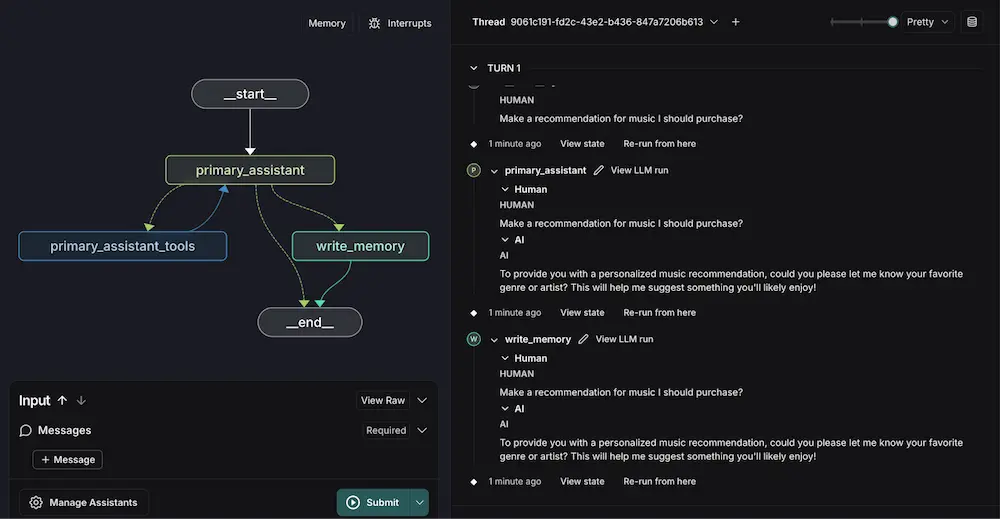
- Setting evaluation criteria. Building automated evals so you know whether the agent is improving when you change a prompt, swap a model, or add a tool. Without this, every change is a guess.
- Reviewing failure logs. A lot of this. You’ll spend more time reading what the agent did wrong than what it did right.
- Adjusting guardrails. Updating prompts, tool descriptions, retry logic, and fallback paths based on what production actually surfaces.
- Stakeholder translation. Explaining probabilistic outputs to teams who are used to deterministic software. Yes, it’s right 94% of the time. No, that’s not a bug.
It’s product management with code in the loop, or it’s engineering with a heavier product hat. Most current openings are some blend of the two.
Who’s Actually Hiring
Job titles in this space fall into three buckets right now.
| Type | What it looks like | How to spot it |
|---|---|---|
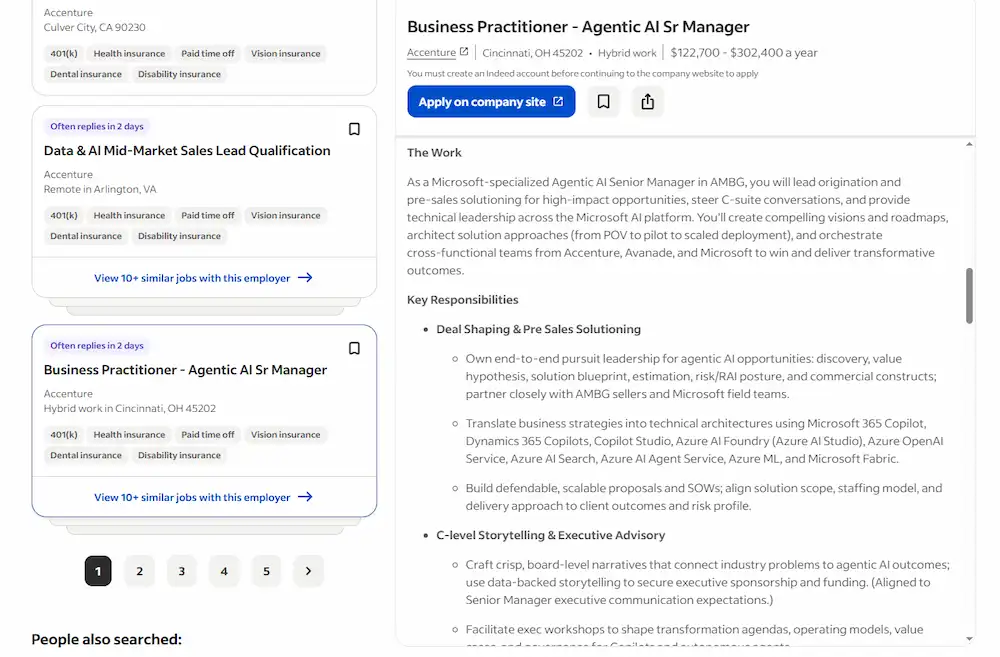
| Genuine roles | Companies that have shipped agentic products and need someone full-time to keep them aligned and improving | JD names specific frameworks (Claude Agent SDK, OpenAI Agents SDK, LangGraph, MCP) and references evaluation, observability, or production agents |
| Inflated rebrands | Traditional companies relabeling their prompt engineer or chatbot lead with a fresher title | JD says “GenAI” repeatedly but never names an agent framework, tool-use pattern, or evaluation approach |
| Hidden roles | PMs, tech leads, and senior engineers already doing this work under their existing titles | The title doesn’t matter; the responsibilities do |
The third category is the largest by a wide margin. Plenty of people are already managing AI agents in production without the title – which means you can start building the relevant skill set inside your current role before any company hands you the new label.
Engineer to AI Manager: The Pivot Question
If you’re an engineer thinking about moving toward this work, the picture is mostly favorable, with some honest caveats.
Reasons it suits engineers:
- Agentic systems are infrastructure-heavy. Logging, tracing, retries, evaluation pipelines, observability – this is engineering work, and the people who can do it cleanly are rare.
- Debugging a non-deterministic system that hits an obscure tool-use error or hallucinates in a corner case isn’t something most non-engineering candidates can do.
- The hard parts (designing tool interfaces, evaluating quality without manual review, building the right abstractions) reward the kind of disciplined thinking engineers already have.
Reasons to think twice:
- You’ll spend significantly more time on product framing and stakeholder conversations than in a pure engineering role. If you actively dislike that, this won’t fix the problem.
- The field is moving fast enough that whichever framework you bet on today will look at least partially outdated within 18 months. Comfort with continuous re-learning is part of the job.
- Compensation variance is large, and not always in favor of the engineer. Sometimes the title comes with a PM band rather than an engineering one.
The Pivot Question for Tech PMs and Managers
If you’re already a product manager or engineering manager looking sideways at this role, the situation reverses.
Reasons it suits you:
- Specifying what an agent should do, and what failure modes are acceptable, is closer to product work than to traditional ML engineering.
- Failure-analysis discipline transfers directly – managing the gap between “what the system did” and “what stakeholders expected” is your normal day, just with a probabilistic component bolted on.
- Domain knowledge (what the agent should actually accomplish, and how it should interact with humans) is currently scarcer than the code to build the agent itself.
Reasons to think twice:
- You’ll need to be more technical than a generalist PM. Comfortable reading code, understanding API contracts, and getting your hands dirty with at least one agent framework is table stakes.
- The role still falls on the technical side of the org chart in most companies. Expect to be evaluated by engineering norms, not product ones.
What You Need to Learn
A rough priority order, regardless of which side you’re coming from.
Hard skills, roughly in order of usefulness:
- How LLMs actually work – transformer basics, context windows, tokenization, the difference between fine-tuning and prompting.
- Tool use / function calling patterns. OpenAI Tools, Anthropic tool use, and the Model Context Protocol are the three to know.
- Evaluation. How do you measure agent quality at scale without reading every transcript? This is the most undervalued skill in the field.
- One agent framework end-to-end. Pick one and ship something – depth in one beats shallow exposure to four.
- Observability for non-deterministic systems. Logging, tracing, replay, and the patterns that let you debug what a model decided three steps ago.
Soft skills:
- Specification writing. A vague brief produces a vague agent. The clearest specs almost always produce the most reliable agents.
- Failure analysis. You’ll read a lot of logs. The pattern-matching gets faster, but it never goes away.
- Stakeholder translation. Explaining what “probabilistic” means to people who expect software to behave the same way twice in a row.
How to Start Without an “AI Agent Manager” Title
The fastest way in isn’t a course or a certificate. It’s building something real, even small, that someone (you, your team, a friend) actually uses. Two practical tracks.
For PMs, managers, and non-engineers
Pick a tool with a low barrier and ship a working agent.
- Zapier Agents – agentic workflows on top of Zapier’s existing integration library. Easiest start if you already use Zapier.
- OpenAI AgentKit – a visual builder plus runtime for agents inside the OpenAI ecosystem. Good if you’re comfortable with structured logic but don’t want to write code.
- Claude Routines – Anthropic’s scheduled remote agents. Closer to “operations you can hand to an agent and check on later” than to a chat product.
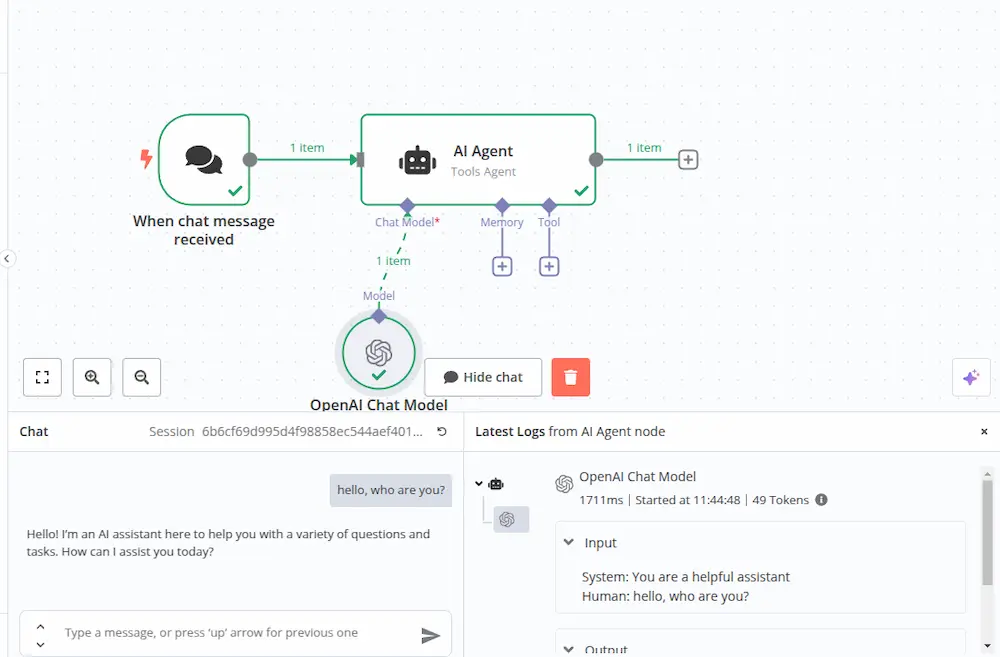
- n8n – open-source workflow automation with growing agentic features. More flexible than Zapier, but you’ll set more up yourself.
Build one small agent that does one real thing in your work – pulls a daily report together, triages incoming requests, summarizes meeting notes against a checklist. A portfolio of one working agent is worth more than a stack of certificates that prove you watched the videos.
For engineers
Use an SDK and own the stack. The frameworks worth your time right now:
- Claude Agent SDK – Anthropic’s framework for production agents. Clean primitives, strong tool-use story, well-documented.
- OpenAI Agents SDK – lightweight Python framework for building single and multi-agent workflows. Good if you’re already in the OpenAI ecosystem.
- Anthropic Managed Agents – managed agent infrastructure if you want the model running and don’t want to handle deployment plumbing yourself.
- LangGraph – graph-based orchestration. The right pick when your agent flows have complex branching and you want explicit state management.
- Pydantic AI – typed agent framework, friendly if you prefer strong typing and validation from the start.
- Model Context Protocol (MCP) – learn this even if you don’t make it your primary stack. It’s becoming the standard for tool-use interfaces across providers and is likely to be the longest-lived skill on this list.
A useful target: build an agent that uses at least three tools, has automated evaluation, and has a real failure mode you’ve identified and handled. That’s enough surface area to have an opinion in an interview, and enough scope to know whether you actually enjoy the work.
The Honest Risks
The case for jumping in is strong, but a few things are worth being honest about.
- The title may consolidate. “AI agent manager” might collapse back into “ML Engineer,” “Product Manager (AI),” or “Tech Lead” within two years. The work doesn’t go away – but the label might, and chasing a label is a bad reason to take a job.
- Compensation variance is huge. The same job description can pay $130K at one company and $320K at another. Hype premium plus genuine scarcity. Pin down the actual scope and seniority before you pin down the offer.
- Skill churn is real. The stack will look meaningfully different in 18 months. Whichever framework you learn this year is a stepping stone, not a destination. The durable bet is the underlying skills – LLM internals, tool use, evaluation, observability – not the specific library.
- Not every company is ready. Some are hiring an agent manager before they have anything for that person to manage. The “Day One: build the evaluation framework” job and the “Day One: untangle three years of duct tape” job pay the same and feel completely different. Ask hard questions in the interview.
Bottom Line
The role is real. Engineering teams running production agentic systems need someone whose job it is to keep them aligned, evaluated, and improving. That responsibility isn’t going anywhere – agentic systems are too useful and too messy to leave unowned.
The title is unstable. Use “AI agent manager” as a flag for the underlying work, not as the destination itself.
The cheapest way to find out if you’d enjoy it is to build a small agent this month – not to read another article about the role.
If you’re using this article to figure out whether the broader pivot suits you – your traits, your values, what you actually want from the next ten years of work, not just whether the role exists – that’s a question one job title can’t answer alone. The CareerSeeker AI quiz takes about ten minutes and match careers, including emerging AI roles like this one, to your Big Five trait profile and values. No account, no subscription.
CareerSeeker AI itself is built on the same agentic patterns this article describes – the case for why the product exists and the founder’s story cover the product and engineering judgment behind running an agentic system in production, from the building side rather than the hiring side.
Key Takeaways
- AI agent manager is a genuine role at companies running production agentic systems, but the title is currently inflated and inconsistently scoped – read job descriptions for specifics, not buzzwords.
- The day-to-day blends product specification, prompt engineering, evaluation, observability, and stakeholder translation.
- Engineers bring debugging and infrastructure depth; PMs and managers bring specification and failure-analysis discipline. Both routes are viable.
- The fastest way in is to build a real agent – Zapier, OpenAI AgentKit, or Claude Routines for non-engineers; Claude Agent SDK, OpenAI Agents SDK, LangGraph, Pydantic AI, or MCP for engineers.
- Treat the title as a moving target. Treat the underlying skills – LLM internals, tool use, evaluation, observability – as the durable bet.