

Is Outlier AI legit in 2026?
Short answer: Yes – it’s a real platform operated by Scale AI, and it does pay. But it has enough operational problems that it shouldn’t be your primary income plan.
- Legitimate company, real pay. Outlier is run by Scale AI, a major AI infrastructure company. Tasks are real, pay is real, and when platform bugs prevent you from submitting finished work, we were still paid for our time.
- Support is slow and unhelpful. Expect 7+ day response times, template answers, and tickets that resolve on their own without anyone telling you.
- One security practice we won’t recommend. During onboarding to one project, Outlier asked us to enter credentials for an off-platform service into a plain-text web form. We did not proceed, and we cover why below.
Who it suits: Native speakers of in-demand languages who want flexible side income and can tolerate friction.
Who should skip it: Anyone who needs reliable, predictable earnings, or who is privacy-conscious about how many third-party services hold their data.
Jump to our full verdict below
If you have been looking for flexible online work that lets you earn money from home on your own schedule, you have probably come across Outlier AI. The platform – operated by Scale AI, one of the most prominent data infrastructure companies in the artificial intelligence industry – connects freelance contributors with AI research projects where their human judgement and expertise help improve language models. The pitch is appealing: skilled work, flexible hours, no commute, tasks you can pick up and put down whenever you like.
We decided to put that pitch to the test. The CareerSeeker AI team member signed up, went through the onboarding process, and worked on live tasks so we could give you an honest, first-hand Outlier AI review. What we found is a platform with a genuinely strong idea at its core – and a surprisingly large number of practical problems that get in the way of it.
This review covers everything: registration, customer support, task quality, pay, data privacy, and a few things that genuinely surprised us. If you are considering Outlier AI as a side income or a flexible freelance option, read this first.
If you are exploring online work more broadly, start with a career fit assessment.
What Is Outlier AI?
Outlier AI is a freelance platform that hires contributors – referred to internally as “AI trainers” – to review, evaluate, and improve responses generated by large language models. Work typically involves reading AI-generated text and rating it, writing responses to prompts, comparing multiple outputs, or correcting inaccuracies. Tasks are designed to provide the kind of nuanced human feedback that machine learning systems cannot easily generate themselves.
The platform is operated by Scale AI, which provides data and AI infrastructure to major technology companies. Outlier AI is the consumer-facing side of that operation – the part that recruits and manages independent contributors at scale.
Contributors are not employees. They work as freelancers, choose their own hours, and are paid per task rather than by the hour. This model is common across the AI data annotation industry and, in theory, offers genuine flexibility for people looking to earn on the side without fixed commitments.

Outlier AI in 2026: Current Status
Last updated: April 2026.
Outlier AI is actively operating as of April 2026. The platform continues to recruit contributors, and tasks remain available across multiple languages and project types. Scale AI, the parent company, is operational and continues to be one of the larger AI data infrastructure providers in the industry.
Here is what we can confirm about the current state of the platform:
- The platform is live and accepting new contributors. Registration is open, the onboarding flow works (bugs notwithstanding), and new projects are launched regularly.
- Pay continues to be task-based. There has been no shift to an hourly or salaried model. Rates vary by project and contributor tier.
- Support quality has not noticeably improved. The support experience we describe in this review reflects interactions through early 2026. If anything has changed materially, we will update this section.
- The parent company. Scale AI’s position in the AI industry remains significant in 2026. Outlier’s operational continuity is directly tied to Scale AI’s commercial relationships with its enterprise clients.
- No major platform redesign or policy overhaul has been announced publicly that would change the substance of this review.
If you are reading this article months after the April 2026 update above, check the date stamp. The AI data annotation space moves quickly – platforms change pay structures, add or remove languages, and adjust policies without always telling contributors. Treat any review (including ours) as a snapshot, not a permanent record.
The Registration Experience
Getting started with Outlier AI involves more than creating a profile and verifying your email. The onboarding process includes a language screening, an application review, and in some cases a paid trial task before you are admitted to any projects.
The screening itself is not unreasonable – verifying that contributors meet a certain standard makes sense for a platform selling quality to enterprise AI clients. What we found less reasonable was the nature of some screening questions.
During our application, we were asked to provide detailed, open-ended answers about specific professional situations: problems we had solved, decisions we had made, outcomes we had produced. The level of specificity required went beyond what would be needed to assess general competency. We were, in effect, being asked to share commercially sensitive professional detail as part of an unpaid screening process. Whether that information is used for anything beyond evaluation is not made clear in the process itself.
We would encourage anyone going through the screening to be thoughtful about how much detail they share, particularly if their professional background involves proprietary projects, client confidentiality, or sensitive commercial information.
Customer Support: Expect to Wait
This was the area that frustrated us most consistently, and it is worth addressing in detail because good support can make an otherwise imperfect platform tolerable – and poor support can make a reasonable platform genuinely difficult to use.
Outlier AI routes initial support requests through an AI assistant. That is not unusual. Many platforms use automated triage to handle common queries before escalating to a human. The problem is that Outlier’s AI assistant is not very good. It responds with the same template-style answers regardless of what you actually ask. We asked specific questions and received generic responses that failed to address the issue. When we rephrased or escalated, we received the same answers again.
Escalating to a human agent – via Zendesk – improved nothing in the short term. Response times were slow, often exceeding seven days. When a response finally arrived, it frequently matched the template the AI had already sent, suggesting the ticket had not been read carefully. In one case, we were asked to record a video demonstrating our issue. The issue in question was that we had not received a verification confirmation text. There was no video to record.
The most concrete example: during registration, we encountered a technical problem with the mobile phone verification step. The system was not sending verification text, which blocked us from completing registration entirely. We raised the issue, submitted a ticket, and waited. The support interactions did not resolve anything. Approximately one month later, the issue resolved on its own – apparently a bug on Outlier’s side that eventually got fixed. No one updated us. No one followed up. The problem simply stopped existing one day.
For a company that is in the business of improving AI, the quality of its own AI-powered support tools is a conspicuous gap.
Technical Issues and Platform Bugs
The verification problem was not an isolated case. We encountered technical issues at multiple points during our time on the platform.
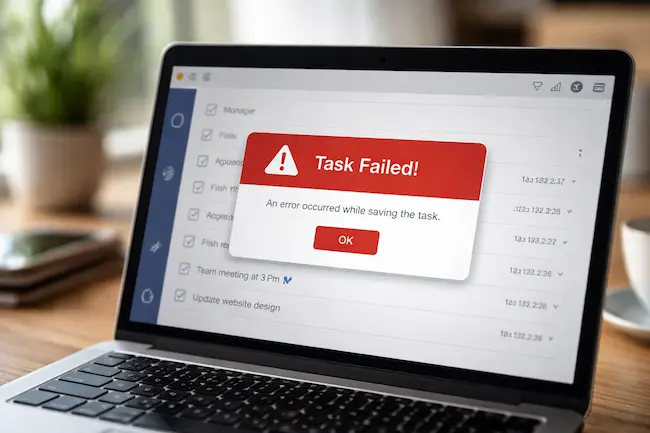
One of the more consequential bugs affected task submission. On more than one occasion, we completed a task in full – reading, evaluating, writing responses – only to be unable to submit our work because of an error indicating the task had already received the maximum number of allowed responses. The task had not been flagged as unavailable before we started. We were not warned during the process. We simply could not submit at the end.
We also noticed inconsistencies in how completed verification steps were displayed. A step would show as complete, then appear as incomplete on a subsequent login. Frontend errors appeared without clear explanation. These are not individually devastating issues, but they compound – and they erode confidence in the platform’s reliability when you are being asked to invest your time.
Data Privacy and Third-Party Services
Working on Outlier AI projects requires more than an Outlier AI account. Depending on the project, contributors are required to register with and use additional third-party platforms. During our experience, this included a third-party time-tracking service.
This means that in order to complete paid work for the platform, you share your personal data not only with Outlier and Scale AI, but with whichever external services are required for the specific project you have been assigned to. The number of parties holding your data grows in proportion to the number of projects you work on.
This may not be a dealbreaker for everyone, but it is worth knowing before you sign up – particularly if you are privacy-conscious or if you already use multiple freelance platforms and want to limit the spread of your personal information.
A Security Issue Worth Highlighting
One thing we encountered during our time on Outlier AI we want to describe plainly, because it falls outside the scope of normal “platform has bugs” criticism.
When joining one of the available projects, we were directed to enter a username and password for an off-platform service into a web form in plain text. Not a dedicated secure authentication flow – a form field, in a browser, asking for credentials in clear, readable text.
Submitting credentials in plain text through a web form is not consistent with basic security hygiene, regardless of whether the form uses HTTPS or the receiving system is otherwise secure. It is the kind of practice that security training specifically warns against, because it creates unnecessary exposure and sets a poor standard for how credentials should be handled. Practical advice: never use the same password twice.
Red Flags and Concerns: What to Watch For
If you are asking whether Outlier is safe, whether it is a scam, or whether anything about the platform should give you pause, here is what we would flag based on our first-hand experience. Outlier is not a scam – it is a legitimate platform paying real contributors – but “not a scam” is not the same as “no concerns.”
1. Plain-text credential requests. As we describe above, one project onboarding asked us to enter credentials for a third-party service into an ordinary web form field. This is not acceptable security practice. If you are asked to submit any username, password, or API key outside of a proper authentication flow, decline and raise a support ticket.
2. Data spread across third parties. Working on certain projects requires registering with additional external platforms – including, in our experience, a third-party time tracker. Your personal data ends up in the hands of more companies than the initial Outlier signup implies. The exact list is not disclosed until you are mid-onboarding on a specific project.
3. Sensitive information requested during unpaid screening. Some screening prompts ask for detailed, specific professional examples – the kind of material that could touch on confidential client work or proprietary details. Share general examples, not specifics you would not publish on LinkedIn.
4. Email verification and other “ghost bugs.” We spent roughly a month unable to complete registration because the system was not sending verification emails. No one confirmed the bug existed. No one told us when it was fixed. If onboarding stalls, assume the issue is on their side and revisit in a few weeks rather than repeatedly escalating to a support team that may not read the ticket.
5. Task-submission failures with no appeal. On several occasions we completed a task in full, only to be blocked from submitting because the task had silently hit its response cap. There is no appeal mechanism. Outlier did pay us for time spent in these cases, which is the right behaviour – but it would be better if the platform closed full tasks before you could start them.
6. Notification noise that doesn’t match reality. Four to five emails in a single evening for tasks that are not available to you or are affected by bugs. This is a nuisance, not a danger, but it is worth a filter rule in your inbox.
What Outlier is not: It is not a phishing operation, a pyramid scheme, or a pay-to-work trap. We did not encounter any request for upfront payment, and contributors are not asked to recruit others. The concerns above are operational and security-hygiene concerns – real, but different from scam-level risk.
Tasks: Language Mismatch and Miscommunication
Outlier AI supports a wide range of languages, which is one of the genuinely appealing things about the platform. If you speak a language other than English, there is theoretically demand for your skills.
The problem is the gap between what the platform says and what the platform does. We completed a language screening for a specific language, were confirmed as eligible, and then received no tasks in that language. When we investigated further, the explanation from platform documentation and from staff pointed in different directions: some materials indicated that proficiency was sufficient for certain tasks; staff communications indicated that only native speakers would be assigned those tasks. We could not get a clear, consistent answer.
This is not a minor confusion. If someone completes a screening, is accepted, and then receives no work – while the platform continues to indicate demand for that language – that is a meaningful communication failure. It wastes the applicant’s time and produces uncertainty that is difficult to resolve through the support channels we described earlier.

Email Volume
Once you are registered with the platform, expect regular email. During active periods, we received between four and five emails in a single evening – notifications about tasks that were either unavailable to us, outside our verified scope, or that turned out to be affected by the bugs described above. Many times we received the same email twice.
This is a nuisance rather than a serious complaint, but it is worth noting. If you sign up expecting a manageable relationship with the platform, the email volume may catch you off guard. The notifications did not consistently reflect tasks we could actually do, which made filtering them for useful signal difficult.
What We Actually Liked
We want to be fair. Not everything about Outlier AI was a problem, and some aspects of the platform are genuinely well done.
The interface. The website is clean, modern, and easy to navigate. The dashboard is logically organised and does not require a learning curve to understand what you are looking at. For a platform operating at the scale Outlier AI does, this is a non-trivial achievement.
Flexibility. The core promise – work when you want, as much or as little as you want – is real in the sense that there are no shift commitments or minimum hour requirements. If you have a spare hour and there are tasks available, you can work. If you do not, nothing happens to your account.
Language breadth. The variety of languages supported is a genuine strength. If you have fluency in a less common language, Outlier AI is one of the few platforms in this space that may have demand for it – though, as noted above, the gap between stated demand and actual task availability can be significant.
Payment protection when bugs get in the way. This one surprised us. When a platform bug prevented task submission – time already spent, work already done – we were still paid for that time. Outlier AI did not treat the failed submission as a forfeit. For a gig platform, that is genuinely decent behavior, and it is worth acknowledging.

How Does the Pay Compare?
Pay on Outlier AI is task-dependent and varies by project. We are not going to publish specific figures here because they change, and any number we quoted could be outdated by the time you read this.
What we can say is that based on our experience, the effective hourly rate – accounting for time spent on task selection, completion, and the occasions when submission fails – did not stand out as competitive relative to similar platforms. In our assessment, platforms like DataAnnotation offer more consistent task availability and comparable or better compensation for similar work. We will publish a full review of DataAnnotation separately so you can compare directly.
If you are evaluating Outlier AI primarily on financial grounds, we would recommend calculating your effective rate (including any time lost to bugs or incomplete tasks) rather than taking the stated per-task figures at face value.
Who Might Find Outlier AI Useful
Despite the problems we encountered, Outlier is not without merit for the right person in the right circumstances.
If you have strong native-language skills in a language with high demand on the platform, and you are willing to navigate the onboarding process, you may find reasonably consistent work. If your expectations around support and platform stability are low – or if you have experience with similar annotation platforms and already know what to anticipate – the platform is manageable.
It is also worth noting that platform quality in the AI data annotation space is inconsistently variable. Outlier AI is not uniquely problematic; it shares many of the same issues as its competitors. The difference is that the gap between what the platform promises and what it delivers in practice tends to be wider than we would like.
Our Verdict
Outlier AI has a legitimate and in-demand core product. The work itself – evaluating and improving AI outputs – is interesting, and the flexibility the platform offers is real. If you are exploring online work options, it is not a scam and it is not a waste of time by default.
But it is a platform with significant operational problems that it has not yet resolved. Support is slow and often unhelpful. The data sharing requirements are more extensive than the initial registration implies. The security practice we encountered during the project onboarding for off-platform use is not acceptable by any reasonable standard.
If you are going to try Outlier AI, go in with realistic expectations: treat it as one option among several rather than a primary income source, be selective about what professional information you share during screening, and read the task requirements carefully before investing time in any task you are not certain you can submit.
If you are still figuring out what kind of work suits you – freelance, remote, or otherwise – a clearer starting point might be understanding what your strengths and working preferences actually are. Our free career quiz takes about five minutes and helps you identify career paths matched to how you actually think and work, which makes it easier to evaluate whether platforms like Outlier AI are the right fit at all.
Frequently Asked Questions About Outlier AI
Yes. Outlier AI is a legitimate platform operated by Scale AI. Contributors are paid for completed work. That said, “legit” does not mean “problem-free” – the platform has real operational issues around support, bugs, and onboarding that are worth understanding before you sign up.
No. We saw no indicators consistent with a scam – no upfront payment requests, no recruiting schemes, no fake task farms. The company is real, the work is real, and the pay is real. The problems we describe are operational and security-hygiene concerns, not signs of fraud.
Yes, as of April 2026. The platform is actively operating, recruiting new contributors, and running projects. See the “Outlier AI in 2026: current status” section above for the current operational snapshot.
Mostly, with one specific caveat. The platform itself handles payment and tasks without obvious issues. However, during one project onboarding we were asked to enter credentials for a third-party service into a plain-text web form, which is not acceptable security practice. If you use Outlier, decline any request to submit credentials outside a proper authentication flow.
Pay is per-task and varies by project, language, and contributor tier. We are not publishing specific figures because they change, and any number would be outdated quickly. What matters more than the per-task rate is your effective hourly rate after accounting for time lost to task selection, platform bugs, and submissions that fail.
In our experience, longer than the platform suggests. A combination of language screenings, application review, and – in our case – a month-long email verification bug meant the full onboarding took weeks rather than days. Your experience will vary.
Based on our experience, no. DataAnnotation offered more consistent task availability and comparable or better compensation for similar work. We will publish a full DataAnnotation review separately so you can compare directly.
No formal experience is required, but you will need to pass a screening that evaluates writing quality, subject-matter competence, and in many cases language proficiency. Strong writing in a high-demand language is the single most useful qualification.
Your data is handled by Outlier, by Scale AI, and by any additional third-party platforms required for the specific project you are assigned to (including, in our experience, an external time-tracking service). The list of parties holding your data grows with each project. If you are privacy-conscious, factor this in before signing up.
Explore More Online Work Options
Looking for legitimate remote work and side income options? These articles from the CareerSeeker AI team cover the landscape honestly:
- 12 Easy Online Jobs for Beginners You Can Start From Home
- Top Legit Online Jobs With No Experience That Actually Pay
- Find the Perfect Second Job: An Ultimate Guide
- 10 Urgent Remote Jobs Hiring No Experience in 2026
This review is based on direct first-hand experience with the Outlier AI platform by the CareerSeeker AI team member. We receive no compensation from Outlier AI, Scale AI, DataAnnotation, or any platform mentioned in this article. We do not participate in the referral program.