Listen (audio auto-generated):
CareerSeeker AI started as a personal experiment – one founder, no investors, and a problem he was trying to solve for himself before realizing thousands of others shared it. In this conversation with long-time friend Piotr Nerc, Przemek Czerpiński talks openly about building the platform without a traditional tech background, the loneliness of solo founding, why he refuses to use dark patterns, and what his own product revealed about the direction his career should take. It’s an honest look behind the scenes – burnout, doubts, decisions, and small wins included.
Meet the Founder Behind CareerSeeker AI
Piotr Nerc (interviewer, long time friend): I’ve had the pleasure of witnessing the birth and growth of CareerSeeker AI, and I believe it’s a compelling story worth sharing with a wider audience. Before we dive in, tell us who you are – the mind behind this project.
Przemek Czerpiński (Founder of CareerSeeker AI): I spent most of my professional life letting opportunities decide my direction rather than choosing for myself. Building CareerSeeker AI was the first time I stopped drifting. I have an analytical mind but was never good at maths – I think I need patterns grounded in real-world application rather than abstract models. I’m drawn to psychology: understanding why people make the choices they do, where our motivations actually come from. I live in Kraków, Poland, and I tend to think about problems we all share and how to solve them.
I spent most of my professional life letting opportunities decide my direction rather than choosing for myself. Building CareerSeeker AI was the first time I stopped drifting.
Why CareerSeeker AI Exists
Piotr: Alright, and tell us how it all began. Where did the idea for CareerSeeker AI come from? Was it one of those Hollywood-style moments when some sage suddenly shouts “Eureka!”, or was the project born out of more deliberate and thoughtful planning? Also, tell us about your motivations – what drove you to commit so much time and energy to this project?
Przemek: This may sound surprising, but the truth is I didn’t plan any of this. I had a personal problem with my own career that I wanted to solve. I was between jobs and wanted to use this time for a personal project that was supposed to help me discover – perhaps for the first time in my life – what I actually want to do. I had the impression that I’d never really sat down and decided, “This is the path I want to take.”
I realized I might not be the only one facing such a dilemma. Whenever I had an opportunity to talk to anyone about their job or career, I learned that most people don’t even ask themselves what they want to do in life, while most of them are not really happy. I don’t blame them – we’re rarely taught to ask these questions, and life has a way of keeping us too busy to stop and think.
I wanted to change that for very primal reasons: life is simply too short to spend 8+ hours a day being miserable. The AI boom inspired me to use new technologies to overcome my own limitations and create something that other people could use as well. That’s how a side project became a business idea and a career opportunity for me. In a sense, I am a perfect testimonial to what conscious career discovery can lead to.
Life is simply too short to spend 8+ hours a day being miserable.
Building a Real Product Without a Traditional Tech Background
Piotr: How is it possible that someone without extensive programming experience or a strong technical background was able to bring a product like this to life? Tell us about the challenges you had to face along the way.
Przemek: I was a computer geek growing up and was very interested in tech, programming, and graphic design. I also studied IT, so I was no stranger to programming and web development. However, I never liked it very much back then because university focused heavily on math-oriented programming and far less on practical coding. As I mentioned, maths felt too abstract to me, and I didn’t enjoy it.
After my first serious job, I slowly drifted away from IT toward more operational or marketing-oriented responsibilities. Still, I feel confident that I have enough programming background to manage AI coding agents and step into the role of a technical director. That’s where AI comes in – it closes the technical gap.
The biggest challenge was not having built something this big from scratch before, which meant learning from my own mistakes – more than once. That’s how real experience is built.
The Hardest Part of Solo Founding
Piotr: So, tell us about the best and worst moments you’ve experienced while working on this project so far. Tell us how you overcame those challenges.
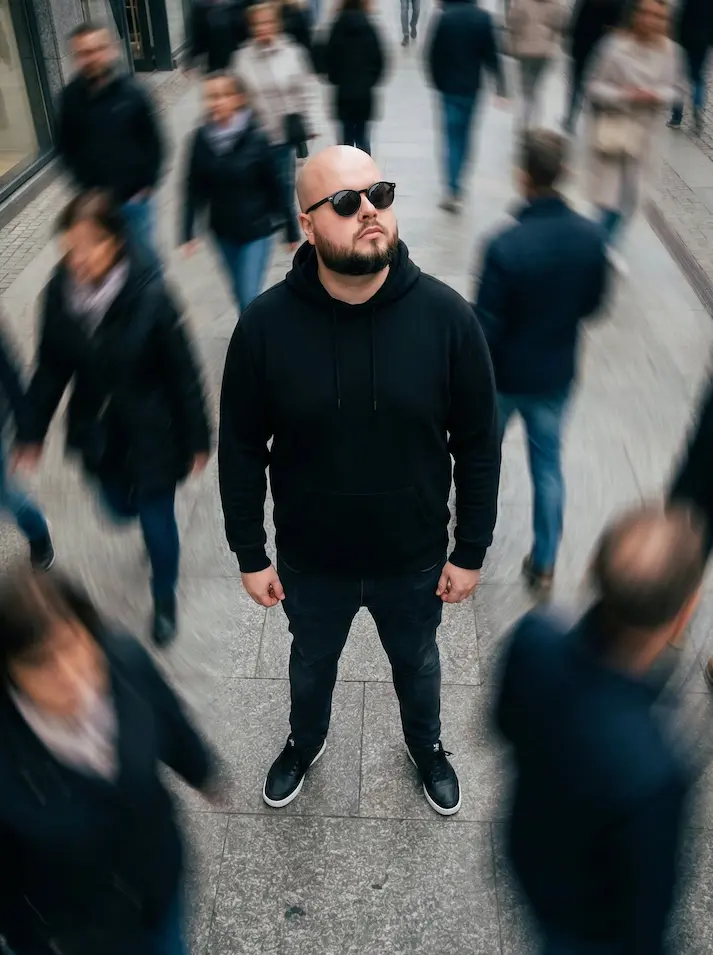
Przemek: Despite the technical and architecture-related issues I faced, the hardest part of being a solo founder is loneliness. Of course, there are friends like you who are always ready to help, but at the end of the day you’re working on your own 24/7 – the mind never sleeps – with a lot of pressure, anxiety, and responsibility.
Working on your mindset and trying to maintain balance helps. When you’re your own boss, you also need to know when to say “enough”. I was never a big fan of hustle culture. I believe proper rest boosts productivity far more than waking up at 5:00 a.m. every day and taking ice baths.
On the other hand, I feel very grateful and motivated when I see a growing number of people using the service I created. I’d like to believe that, at least for some of them, it’s genuinely helpful and valuable. That was always my priority. To this day, I remember feedback from one user who said the output he received was more eye-opening than several professional career counseling sessions he’d paid for.
Why Hustle Culture Is a Trap (and What Works Instead)
Piotr: You’re critical of hustle culture. How do you actually structure your days as a solo founder to stay productive without burning out?
Przemek: As Edgar Allan Poe wrote “believe nothing you hear, and only one half that you see” – social media provides an extremely distorted image of reality, where no one really is showing any struggles. This applies to founders and so-called hustlers as well, whose goal at the end of the day is to create viral content. They want you to feel bad in comparison, because this will trigger emotions that sell content. In reality, many of these people probably earn more from creating content about success than from their actual businesses. If that model works for someone in a healthy way, fine – but I doubt it’s sustainable for most people.
When you are your own boss, you are also your most valuable and irreplaceable employee. You need to take care of that person, because the whole project relies on them. Even if you are working on something you are passionate about, it is still easy to get burned. Speaking from experience, this is the worst thing that can happen. I’ve been there, and recovery from pushing yourself too hard takes longer than you’d think.
What works for me – and I say this as someone with ASD, which creates its own challenges, especially in work environments designed for neurotypical people – is to be kind to yourself and take care of basics like sleep, hydration, regular meals, and exercise. It might sound trivial, but how much water have you had today?
Have a hobby not related to your work. Be close to nature, work out or do cardio – it helps with the body and the mind. You can also seek professional help with a licensed therapist – there is no stigma nowadays. While working on your product or service – plan small steps and celebrate even tiny victories.
When you are your own boss, you are also your most valuable and irreplaceable employee.
From 10 Users to 1,000: The Reality Behind the Numbers
Piotr: Mindfulness, self-care, work-life balance – noted! Now let’s take a look behind the scenes, shall we? I know you’re someone who carefully analyses data – tell us what it looks like in numbers. Have the results reached the levels you initially set for yourself?
Przemek: Poles like to say: appetite comes with eating. I was genuinely happy when the first 10 users showed up. I celebrated the first 100, and now I’ve reached 1,000 users. This is beyond my expectations, and I’m very grateful to see where it’s going.
The feedback I received so far was also very positive. It was surprising to see high school students from developing countries using the service – people at the very start of their journey, already asking these questions.
Why So Many People Feel Lost in Today’s Job Market
Piotr: Numbers and statistics are one thing, but we know your motivation goes far beyond them. What do you think about the current situation of people who feel lost in today’s job market? Is it really that difficult to figure out what we want to do in life?
Przemek: I was like many of you – having mixed emotions, feeling unhappy, and being confused about where I was in life. We rarely ask ourselves deep, meaningful questions about what we truly want. That’s why I believe CareerSeeker AI can be so valuable. It’s not about what’s on your CV, where you worked, or for how long – those questions don’t give you the answers you’re really looking for.
We also place many restraints on ourselves, constantly looking for reasons why certain career paths aren’t for us. I know this fear and anxiety, but it’s worth asking yourself: why is it really not possible? Don’t get me wrong – I’m very down-to-earth, and I don’t believe anyone can do absolutely anything they want in life. We all have limitations and predispositions. At the same time, I strongly believe we can be brave enough to motivate ourselves and move in directions that are aligned with who we want to become.
Despite popular mainstream slogans based on fear claiming that “AI will take our jobs” – I believe today’s job market offers the greatest variety of opportunities we’ve ever seen, and new technologies can be used to our advantage. Still, it’s easy to get lost, and having a compass helps. I believe my product can serve as one, showing people realistic career opportunities that are truly theirs.
What CareerSeeker AI Revealed About Its Own Founder
Piotr: You mentioned you never really sat down and decided on a path before. What did CareerSeeker AI reveal about your career direction? What surprised you?
Przemek: The first prototype suggested that creating small, ethical problem-solving digital products would fit me perfectly and that’s exactly what I’m doing and what I want to do. The accuracy surprised me. It was proof that the questions and algorithm I’d designed could create something meaningful – if answered honestly.
What’s Next: The Pro and Ultimate Plans
Piotr: In this case, the existence of this service is the best proof of its high accuracy! Now tell us about your plans for future development. Expanding its functionality, strengthening the analytical layer with the help of AI, or are you aiming for something even bigger?
Przemek: I’m preparing to launch the Pro and Ultimate premium plans in the coming weeks. They’ll offer much more than the free quiz – it’s like a supercharged version of what’s available now with more depth and more features. I’m very excited about it. There are several other ideas on the feature roadmap, but I haven’t yet decided which direction to take. I prefer to move one step at a time. I’ll definitely focus heavily on marketing in the first half of the year.
I didn’t want to build something I’d hate to use.
Advice for Anyone Thinking About Starting Their Own Project
Piotr: Fingers crossed! Wrapping up our talk – what advice would you give to people who are thinking about starting their own project? What do you believe is truly crucial in such a process?
Przemek: Take the matter into your own hands, don’t wait. With today’s AI tools, you can turn ideas into prototypes and MVPs in just weeks, even as side projects. If you’ve had an idea in your head for years, now is the time to build it. Focus on planning and structural design – if you do thorough work at this stage, everything will go much more smoothly later.
Pay close attention to security and privacy – many AI tutorials show you how to build a website from a single prompt but skip this entirely. Anything you release to the public internet will be targeted and tested for vulnerabilities with malicious intent. As a user myself, I hate handing over my data for no reason, and I have an aversion to dark patterns like: spend 10 minutes on a personality quiz, then pay to see your results. I didn’t want to build something I’d hate to use.
If you are interested in more interviews, read the experimental one with the AI agent behind the scenes: I read between the lines – AI agent interview.